
In March of 2020, the world of education turned upside down as many teachers went from working in schools everyday to working from home and attempting to provide our students with some level of education while balancing the inequities of student access to technology on students from low-income families. The year ended with. both parents and teachers alike disappointed in the end result. We weren’t prepared to reach every student, and for the first time (for some educators, anyway), the differences between the haves and the have nots became glaringly apparent.
If you were like me, you went into the summer thinking ahead. What will the fall look like? If we don’t go back — or if we have to shut down buildings again — what can we do differently to ensure our students still have an opportunity to learn? How can we ensure that public school students in impoverished neighborhoods aren’t getting left further behind? Forward thinking teachers spent at least a little time training for distance learning, looking for resources they could use to address the needs of their students, and working with their administrators to address issues of inequity.
Instead of using your vacation time to recharge and come back strong, you stressed and worried about the students you last saw in March and the ones heading your way in August and September. You watched headlines to see how teachers were once again chided and lambasted if we seemed to have even the slightest of misgivings about going back into schools that were cesspools of germs even before Covid-19 was a thing. You engaged in debates about why it isn’t fair to put the onus of childcare on us…or you questioned the reluctant about why we aren’t more willing to sacrifice ourselves on the altar of capitalism. And so, here we are. Fall is upon us, and instead of coming back strong, we’re starting the school year with just as many questions as we had at the end of the last school year.
Aren’t you tired?
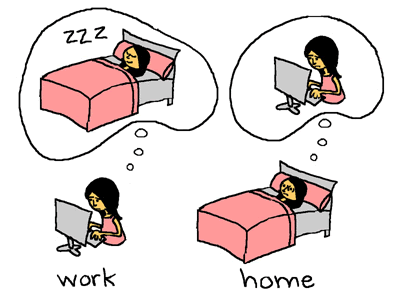
Let’s kick off the school year with some ground rules to ensure you don’t experience some burnout before the end of the first marking period, especially if you are doing any kind of remote learning from your home.
- Stick to your set work hours. Easier said than done, right? Because work and home, for some of us, will overlap, it can be easy to blur the lines. Don’t. Set an alarm for yourself to stop working everyday. And then — this is the hard part — disconnect. Don’t check your work email. Turn your Remind on Do Not Disturb. If you think of something you forgot to tell your students during your class time, treat it as though the bell has rung, and the students are gone for the day: save that “oops I forgot to tell you” message until the following day.
- Set clear expectations for your students and their parents. Once you have communicated what your work hours are (they should follow your school and district guidelines, unless you are volunteering some extra time to them), stick to that. I encourage you to, at least at the start of the year, set out of office reminders on your email at the end of the day. If a parent or student complains that they tried to get in touch with you after your set hours, patiently and firmly remind them that you have your own home to look after when you get off work — even if all that’s at your home is you and your comfy slippers.
- Keep your personal email and phone number private. If you absolutely must, set up a Google Voice number, but otherwise, use apps like Remind or TalkingPts to text parents. Families will appeal to your sympathy if they can when their student is struggling; and often, we’ll want to give in for the greater good. However, in this case, the greater good is maintaining a healthy work/home balance.
- Set up workspace in your home that you can keep separate from your relaxation area. Even if you don’t have a home office, you want to set up a space that you will use exclusively as your working space. This area should not be in your bedroom (ideally, you never want to work in your bedroom to help your body rest easier in your sleeping area); carve out space in your living room or den. In addition to that, you may want to create a portable work area outside — as long as the weather permits, you want to have a space that gives you a chance to get some air.
- Have your work materials in a central location. Pens, pencils, paper, books, and other materials should be in once space so you have what you need when you are teaching. Just like when you are in your classroom, you want to not have to stress out about materials you can’t find when you need them.
- Try to sleep at night. Many of us, including our students, have experienced some sleep issues since the start of this. At least attempt to get some sleep at night, so you can be refreshed during your working hours. It’s hard to model what being alert looks like if you aren’t actually alert yourself. The more rested you feel, more focused and prepared you’ll feel.
Did I leave anything out? If I did, leave a message in the comments.
 The Sassy Jae Journey